DOE chief to spotlight environmental consequences of war at UN climate conference
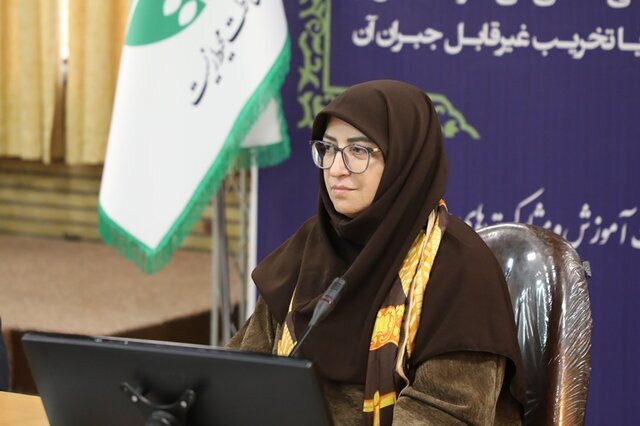
TEHRAN – Shina Ansari, the Head of the Department of Environment, has announced that the country's primary focus at the 31st United Nations Climate Change Conference (COP31) will be to highlight the environmental impacts of war and call for greater international accountability.
Speaking at a press conference held on Iran's participation in COP31, Ansari said that the annual UN Climate Change Conference is one of the world's most significant environmental forums and provides a valuable platform for the Islamic Republic of Iran to present its perspectives, capacities, and concerns to the international community, ISNA reported.
She emphasized that Iran will submit documented and evidence-based reports detailing the environmental, infrastructural, and public health impacts resulting from military aggression. “These findings will be presented to the international community to raise awareness and prompt appropriate international action.”
According to Ansari, even before the outbreak of hostilities [with the US], the Department of Environment had warned international organizations and the United Nations about escalating military activities in the Persian Gulf region.
“The agency had also communicated with environment ministers of the Persian Gulf states, stressing that the region's fragile ecosystems are incapable of withstanding the environmental consequences of armed conflict.”
She explained that Iran's reports will document a broad range of environmental damages, including explosions at fuel storage facilities, attacks on protected areas and ranger stations, damage to oil, gas, and petrochemical infrastructure, impacts on nuclear facilities, destruction of natural habitats, wetlands, and biodiversity, as well as harm inflicted on civilians and critical national infrastructure.
Ansari further stressed that the environmental consequences of war extend well beyond immediate damage. She warned that armed conflict leaves long-term and, in many cases, irreversible impacts on ecosystems, coastal habitats, wetlands, and biodiversity, with recovery requiring substantial time and resources.
She also underscored that the international community should recognize that the war has significantly disrupted Iran's efforts to reduce greenhouse gas emissions and lower its carbon footprint. The environmental repercussions, she noted, are not confined to Iran but extend to neighboring countries and the global environment.
Leave a Comment